Can AI Bridge the Equity Gap in Higher Education? 野狼社区 Institute of Education Conference Asks the Question
The 野狼社区 Institute of Education hosted the Artificial Intelligence in Higher Education: Balancing Equity, Access and Innovation Conference, supported by the Hallsworth Conference Fund, bringing together researchers, students and industry leaders to explore a key question: can generative AI advance equity and accessibility, or deepen existing divides?
The conference, opened by University of 野狼社区 President and Vice-Chancellor, Duncan Ivison, took place on Tuesday, 9 and Wednesday, 10 June 2026. The event brought together perspectives from across the sector to examine how AI is reshaping participation, inclusion and learning.
A series of standout sessions highlighted both the opportunities and challenges of AI in education. A student panel offered candid, first-hand perspectives on global AI inequalities, sharing lived experiences of access, bias and studying in different contexts - the discussion underscored how uneven access to AI tools continues to shape learning outcomes worldwide.
Plenary discussions also formed a central part of the programme. A panel chaired by Professor Khalid Nadvi, Head of the School of Environment, Education and Development, welcomed Mohamed Elrefai (Senior Director and Head of Worldwide Education, Adobe), Professor Mirjam Hauck (Academic Lead for AI in Learning, Teaching and Assessment, Open University) and David Raho (AI Design and Delivery Manager, HM Prison & Probation Service), exploring AI adoption among disabled and neurodivergent learners, alongside the structural barriers to equitable participation.
The opening plenary panel featuring Dr James Brooks, Professor Jenn Hallam, Sami Karamalla Gaiballa, Professor Rebecca Hodgson and Professor Juup Stelma focused on AI and inclusion at The University of 野狼社区. The panel explored how institutional approaches can meaningfully embed inclusion within AI-enabled education, highlighting both progress and areas requiring further development.
Recent studies led by colleagues from the 野狼社区 Institute of Education highlighted both opportunities and risks. Most recently, has found that students with disabilities were already using generative AI to overcome barriers in their learning, yet because these tools were not formally recognised as assistive technologies, their use remained ambiguous, uneven and often financially burdensome.
Dr Skye Zhao鈥檚 global research, involving more than 600 students and educators, highlighted persistent digital divides, alongside linguistic and cultural biases embedded in AI systems. These challenges were particularly acute in the Global South, where access and localisation remained uneven. The report can be accessed .
Drawing on the challenges identified in recent research, the conference was an opportunity to discuss the key priorities for advancing inclusion in AI-enabled education, including sharing these challenges, cross-sector collaboration, and future research directions.
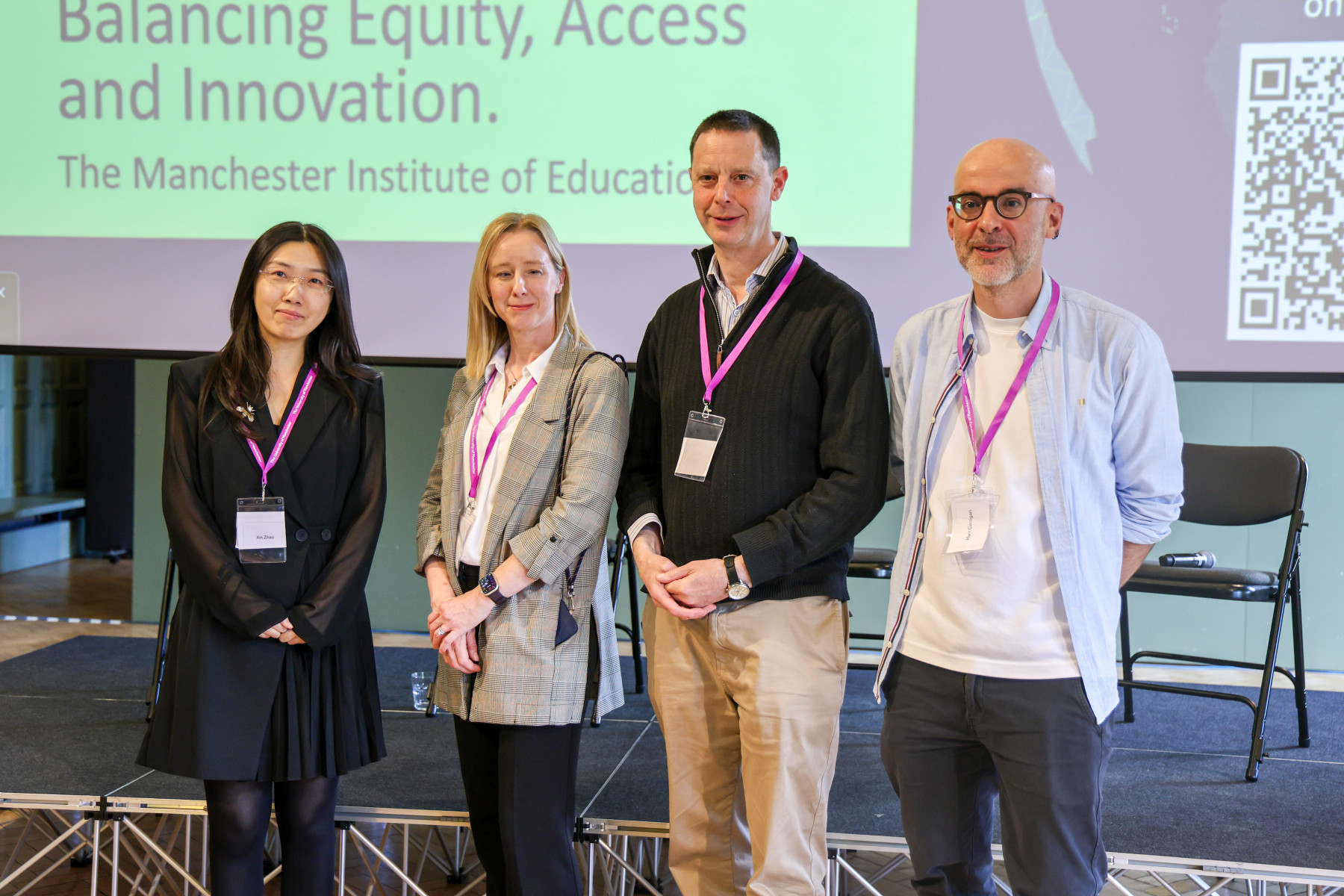
The conference was a chance to bring together voices from across the sector to understand how AI is reshaping education and to ensure that inclusion and accessibility remain at the heart of that transformation
Missed the conference? Listen to our , which captures some of the big debates with AI in Higher Education.