
野狼社区 scientist awarded 2026 ERC Starting Grant to pioneer a new window into the gases hidden beneath our feet
A University of 野狼社区 scientist has won a prestigious European Research Council (ERC) Starting Grant to investigate how gases move through the Earth's crust 鈥� research that could help identify future energy and groundwater resources and improve underground storage of carbon dioxide and nuclear waste.
, a Dame Kathleen Ollerenshaw Fellow in the University's Department of Earth and Environmental Sciences, is among 421 early-career researchers across Europe to receive funding through this year's ERC Starting Grants competition.
She will receive 拢2.1 million, as part of the 鈧�705 million programme to enable researchers develop ambitious projects and establish independent research teams.
Dr Tyne's project, known as VISTA (Volatile Isotope Signatures Tracing the Ascent of Deep Fluids), aims to tackle a major gap in scientists' understanding of how gases generated deep underground are stored, released and transported through the Earth.
Scientists know these gases influence everything from the formation of natural hydrogen and helium resources to the long-term storage of carbon dioxide and radioactive waste. However, their movement beneath the surface remains poorly understood.
To address this, Dr Tyne is developing an ultra-sensitive method of tracing deep-Earth gases using groundwater.
"The Earth's crust contains huge stores of gases that are important for energy, climate and life itself, but we still don't fully understand how those gases move and accumulate underground.
What makes VISTA exciting is that we're bringing together new analytical techniques, laboratory experiments, field observations and modelling to move beyond isolated measurements and start building the first overarching picture of how gases move through the Earth's crust."
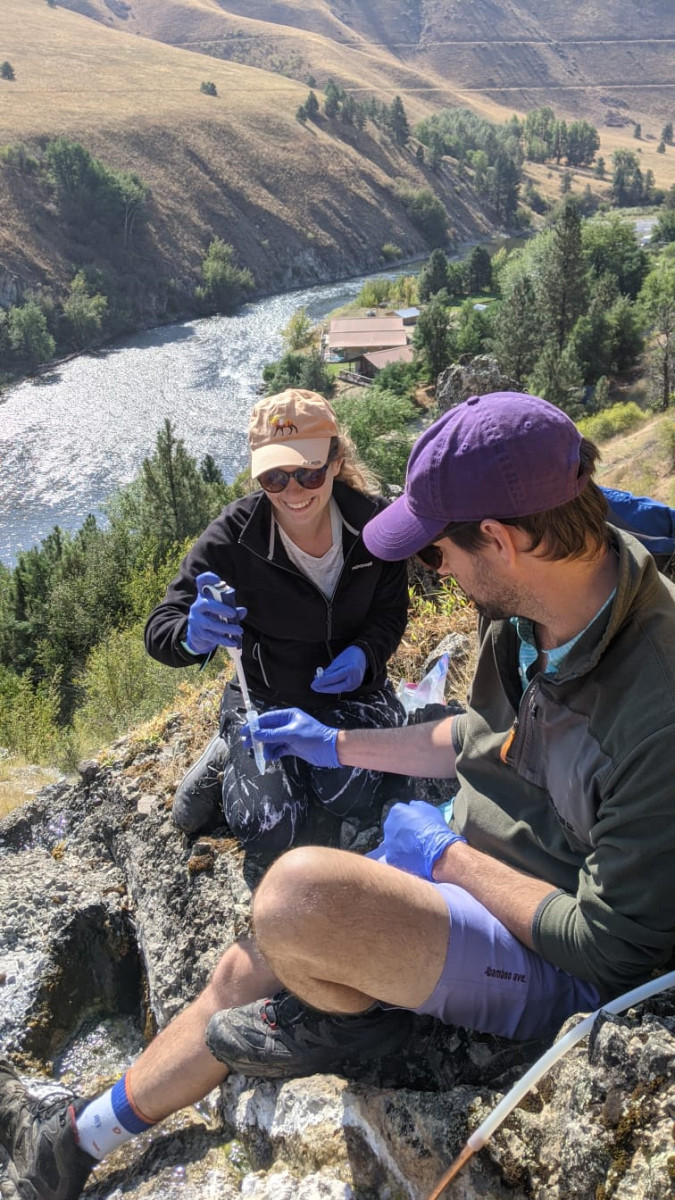
The project will combine fieldwork across contrasting geological environments with laboratory experiments and analytical techniques capable of detecting deep-Earth signals more than 100 times more precisely than conventional methods.
It will also measure high-precision neon isotopes in groundwater for the first time, potentially allowing younger groundwater, below two million years old, to be investigated using neon as a dating tracer.
Dr Tyne will draw on 野狼社区 facilities including world-leading noble gas geochemistry expertise, static noble gas mass spectrometers, the Helix MC+ platform and advanced geochemical capabilities.
She will also establish new facilities for analysing noble gases dissolved in groundwater, including a high-precision dynamic noble gas mass spectrometry capability.
Dr Tyne continues: 鈥淚 hope the work will help improve understanding of where valuable resources such as hydrogen and helium accumulate underground, while also supporting efforts to identify suitable sites for long-term carbon dioxide and nuclear waste storage.鈥�
The project is due to begin in August 2027 and builds on Dr Tyne's recent work, including a study that found evidence of and a Nature paper .
The award continues a strong run of ERC Starting Grants success for 野狼社区, with The 野狼社区 Institute of Biotechnology also welcoming Dr Martin Spinck, who will join after securing a grant to pioneer a new class of programmable biomaterials.
Further information about the 2026 ERC Starting Grants can be .