Urban canals can cut temperatures by more than 2掳C during heatwaves
Study finds waterways could play an important role in protecting people from extreme heat
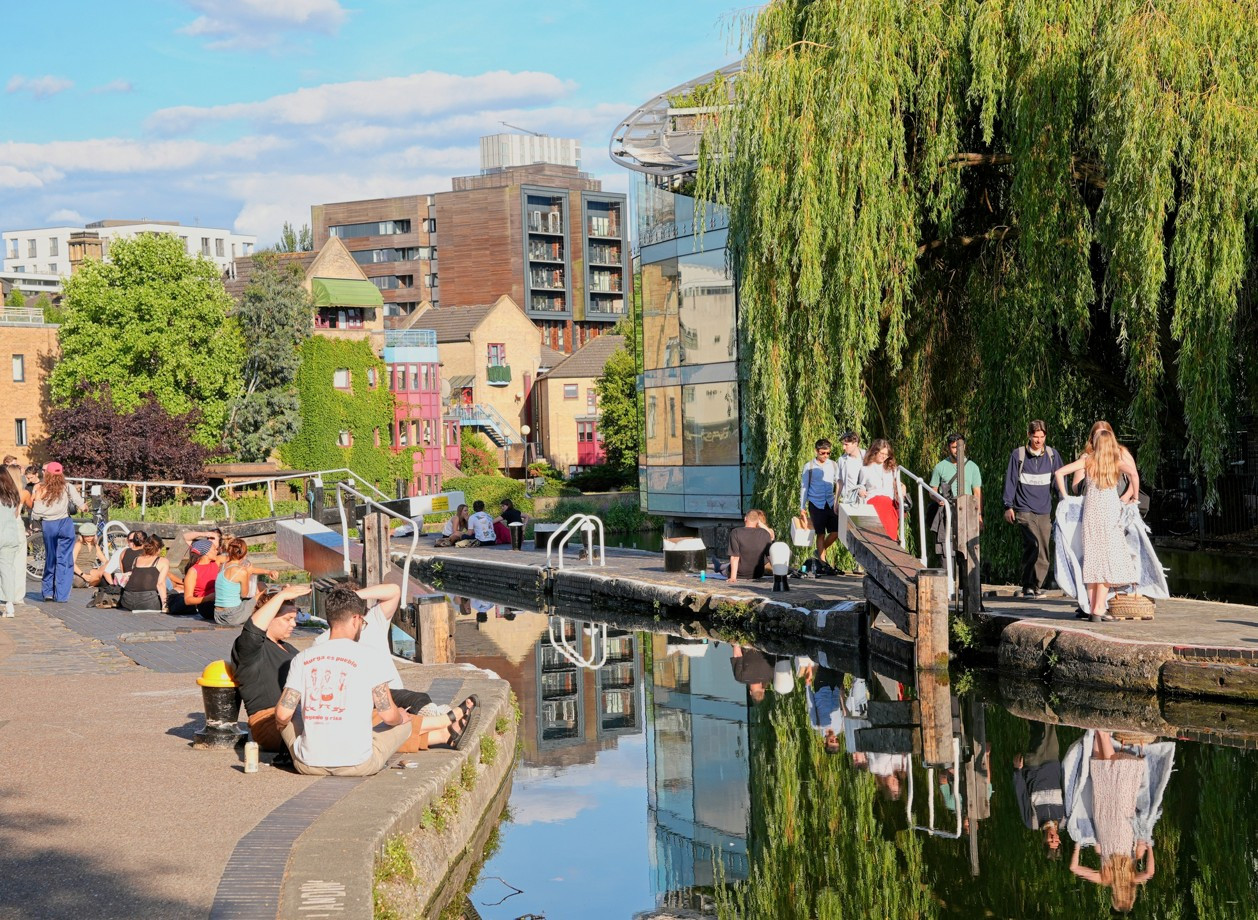
New research from The University of 野狼社区 has found that urban canals can cool their immediate surroundings by more than 2掳C during heatwaves.
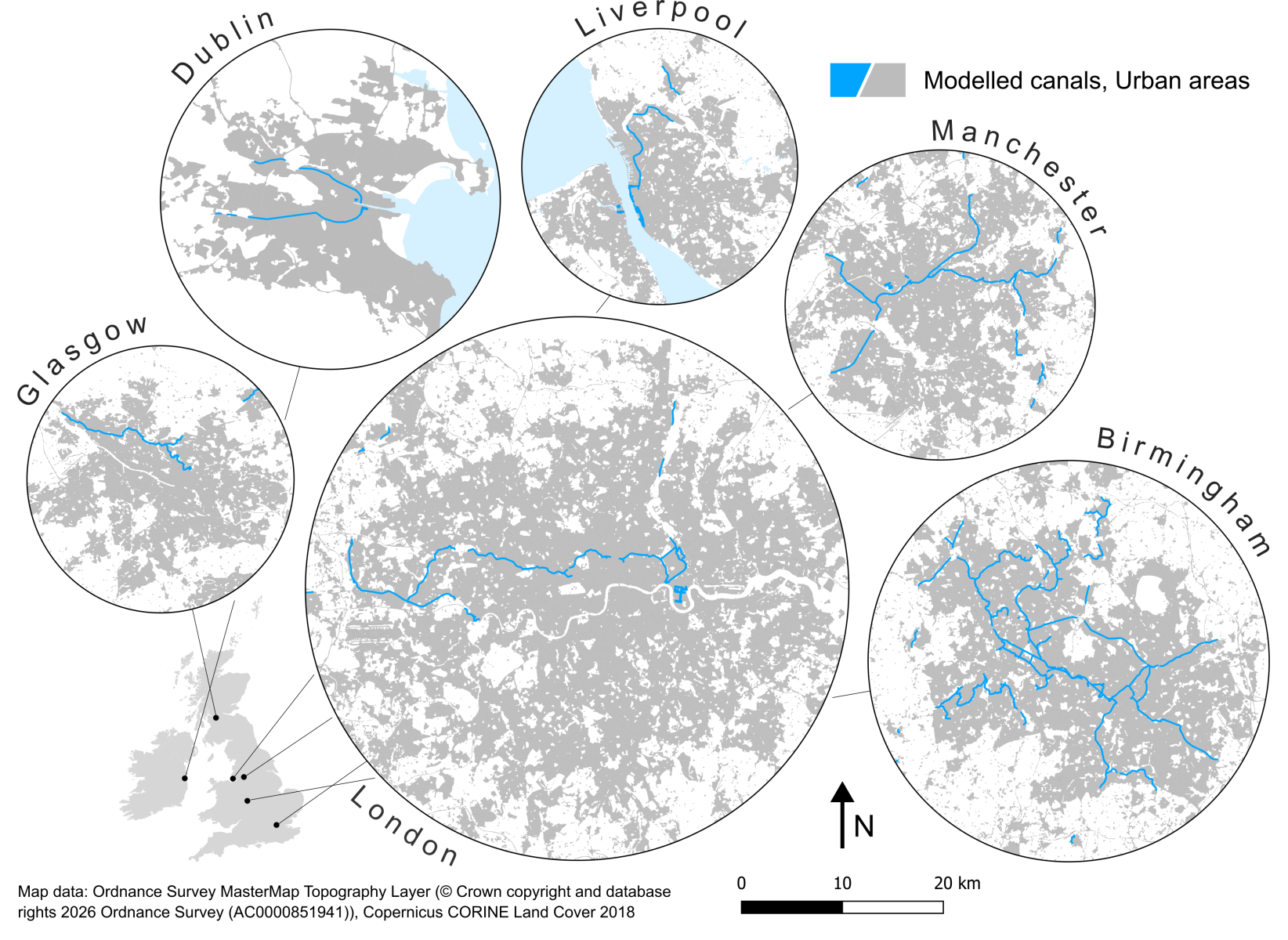
The study, which is believed to be the first to assess the cooling effects of urban canals at a national-scale, covering the urban canal network of Great Britain and Ireland, found that canals reduce surrounding daytime temperatures by an average of around 0.8掳C. During heatwaves, however, the cooling effect increased to between 1.5掳C and 2.3掳C.
Researchers say the findings highlight the overlooked role that canals could play in climate adaptation as cities become hotter because of climate change.
Key findings
- Urban canals reduce daytime temperatures by an average of around 0.8掳C within their immediate surroundings, typically 20鈥�50 metres away from the water
- Cooling is strongest during spring and early summer, reaching around 1.2鈥�1.4掳C
- During heatwaves, canals can lower nearby temperatures by 1.5鈥�2.3掳C
- The cooling effect substantially reduced the number of hours when people in the vicinity of canals would experience moderate and high heat stress
- Around 6.2 million people live within one kilometre of Britain's urban canal network, meaning millions could potentially benefit from these cooling effects
Using a new energy balance model, developed by researchers in the Geography, Planning and Engineering departments, the research simulated the thermal behaviour of more than 2,300 canal sections across Great Britain and Ireland over an entire year.
The researchers found that while canals produce a small warming effect overnight because water retains heat longer than surrounding surfaces, this effect is relatively minor compared with the cooling benefits during the day.
Improving health and wellbeing
The researchers also assessed how canals affect thermal comfort during hot weather.
Their modelling showed that incorporating the cooling effect of canals reduced the number of hours classified as posing moderate heat risk by around 58%, while hours of high heat risk fell by around 74%. In many locations, canals eliminated periods of extreme heat risk altogether, although the researchers caution that this is partly counter-balanced by rising humidity, which also influences people's comfort during hot weather.
The findings suggest canals could help reduce heat-related illness, improve wellbeing and encourage people to stay active and walk and cycle during hotter weather, in turn allowing access to nature and reducing carbon emissions through active transport.
"As climate change makes heatwaves more frequent and intense, cities need every available tool to help people stay safe and comfortable,鈥� said lead author Dr Matt Tomkins. 鈥淥ur research shows that canals, which were originally built to power the Industrial Revolution, could now play an important role in helping cities adapt to climate change.鈥�
"The cooling effect is modest on an average day, but during heatwaves it becomes much more significant, reducing nearby temperatures by more than two degrees in some locations. Even relatively small reductions like these can make an important difference to people's health and wellbeing during periods of extreme heat."
Urban canals have often been overlooked in discussions about climate resilience, compared with parks and trees. Our findings suggest they should be recognised as part of climate-responsive urban design alongside green spaces, particularly because millions of people already live and work within walking distance of the canal network.
Supporting climate-resilient cities
The researchers say that alongside urban heat regulating services, which have been estimated to provide economic benefits of by reducing losses in labour productivity caused by hot days, the studied canals could play a role in reducing carbon emissions, both through enabling active transport during hotter periods and potentially reducing the demand for energy-intensive air-conditioning.
鈥淎ccessible blue and green spaces result in wider health and wellbeing benefits for society鈥� says co-author Dr. Joanne Tippett. 鈥淭he cooling that canals offer could help more people to stay active and access these spaces even during hot days. This highlights the importance of not only protecting our urban canals, but also thinking about how to increase signposting and access, connectivity with other green infrastructure, and wider awareness of these vital networks of urban cooling鈥�.
They emphasise that canals are not a complete solution to rising urban temperatures, but argue they should form part of a wider package of climate adaptation measures alongside parks, trees, sustainable drainage and other forms of green and blue infrastructure.
The study also provides a new modelling approach that could be applied more widely to assess how similar waterways contribute to cooling in other cities around the world, and to complement insights gained from field-based measurements, modelling, and satellite-based observations.
Publication details
The study was published in Nature Communications.
Funding, data, and support for this project was provided by the Canal and River Trust, with the research generously supported thanks to funds raised by Postcode Lottery players.
DOI: