The British General Election of 2024 two years on – Labours Wobbling Jenga Tower
At a time when UK politics is looking unsettled, the Faculty of Humanities recently hosted a special event with political scientist, Professor Rob Ford - looking back at the General Election of 2024 – the focus of the latest edition of an 80-year-old series of that started in 1945 and has covered every General Election since, and is popularly associated with David Butler, who was author or co-author on every volume from 1951 to 2005.
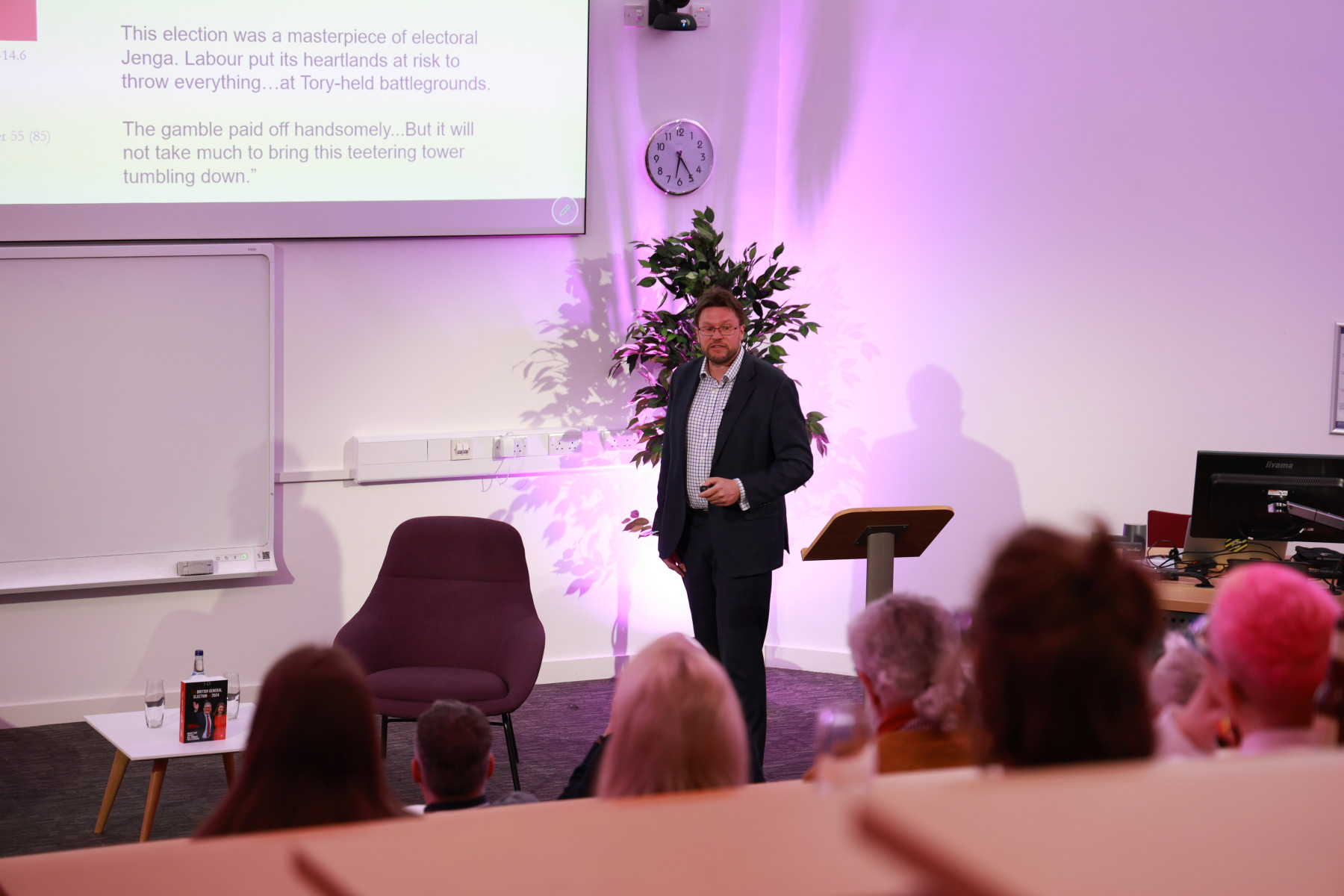
Titled Labour’s Wobbling Jenga Tower: The 2024 general election two years on, the event brought together academics, students, and members of the public to explore how electoral strategy, political fragmentation and voter behaviour are reshaping the UK’s political system.
Opened by the Vice President and Dean of the Faculty of Humanities, Professor Fiona Devine CBE, the lecture formed part of the Faculty’s ongoing commitment to engaging wider audiences in understanding political and social change. Fiona highlighted in her opening remarks that research on democracy, elections and political behaviour “sits at the heart of what the Faculty does, helping to provide rigorous, independent insight into voter behaviour, political identities and electoral volatility.�
Understanding a landmark election
Drawing on the research undertaken by Professor Ford and his co-authors, Rob outlined how Labour’s 2024 victory combined a substantial parliamentary majority with relatively modest popular support, underpinned by what he described as an “electoral Jenga� strategy targeting key marginal constituencies while weakening traditional strongholds.
This approach delivered electoral success but as explored during the lecture, has left the party exposed to political volatility in the years since.
Fragmentation and volatility in modern politics
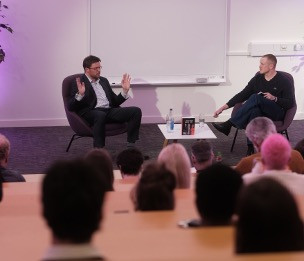
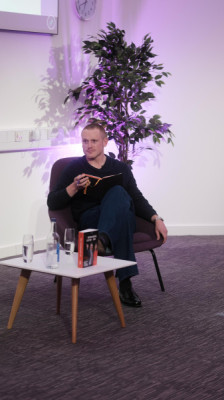 In a live interview recorded with Jack Dulhanty from The Ò°ÀÇÉçÇø Mill, Professor Ford explained how British politics is undergoing a deeper structural transformation.
“The dominant theme of our politics, I think today is that you can’ get back to the box of two-party politics,� he said, noting that voters are now increasingly drawn to a wider range of political parties.
He added that this fragmentation reflects broader shifts in voter identities and expectations: “Voters have a bigger diversity of preferences, and they’re not willing to accept half measures in a big tent two party system. They want the full fat measures�
The discussion highlighted how emerging parties such as Reform UK and the Greens are reshaping electoral competition, challenging traditional assumptions about how votes are won and held.
A fragile governing position
While the 2024 election delivered a decisive parliamentary outcome, Professor Ford emphasised that the foundations of that victory may be less secure than the headline result suggests.
Reflecting on Labour’s time in office, he pointed to the consequences of early strategic decisions and messaging: “That first year was absolutely critical and the disaffection that set in really follows on from that.�
He also highlighted the risks of attempting to balance competing electoral coalitions, warning that efforts to appeal to diverse voter groups may ultimately prove unsustainable: “Their efforts to try and bridge a divide could end up being their undoing.�
Bringing research into public conversation
The event concluded with a Q&A session, giving attendees the opportunity to engage directly with the research and its implications for the future of British politics.
A continuous focus on UK politics at the University of Ò°ÀÇÉçÇø with the British Election Studies.
The British Election Studies, which is currently based at The University of Ò°ÀÇÉçÇø, are public opinion surveys done after every general election, were also started by David Butler and began in 1964 (with some earlier waves traced back to 1959 is run by Professor Ed Fieldhouse and colleagues from Ò°ÀÇÉçÇø, Nuffield College, University of Oxford and Royal Holloway, University of London.
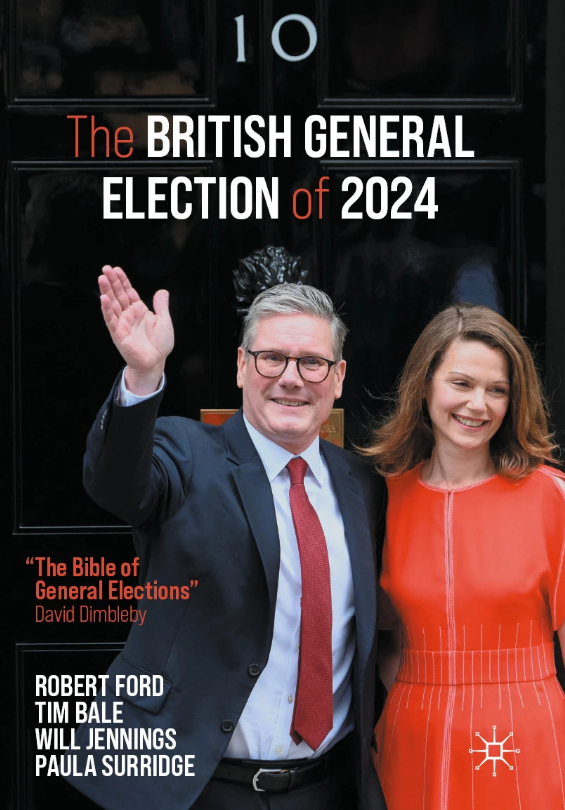
A podcast recording of the interview is available via Acast - or wherever you get your podcasts from.