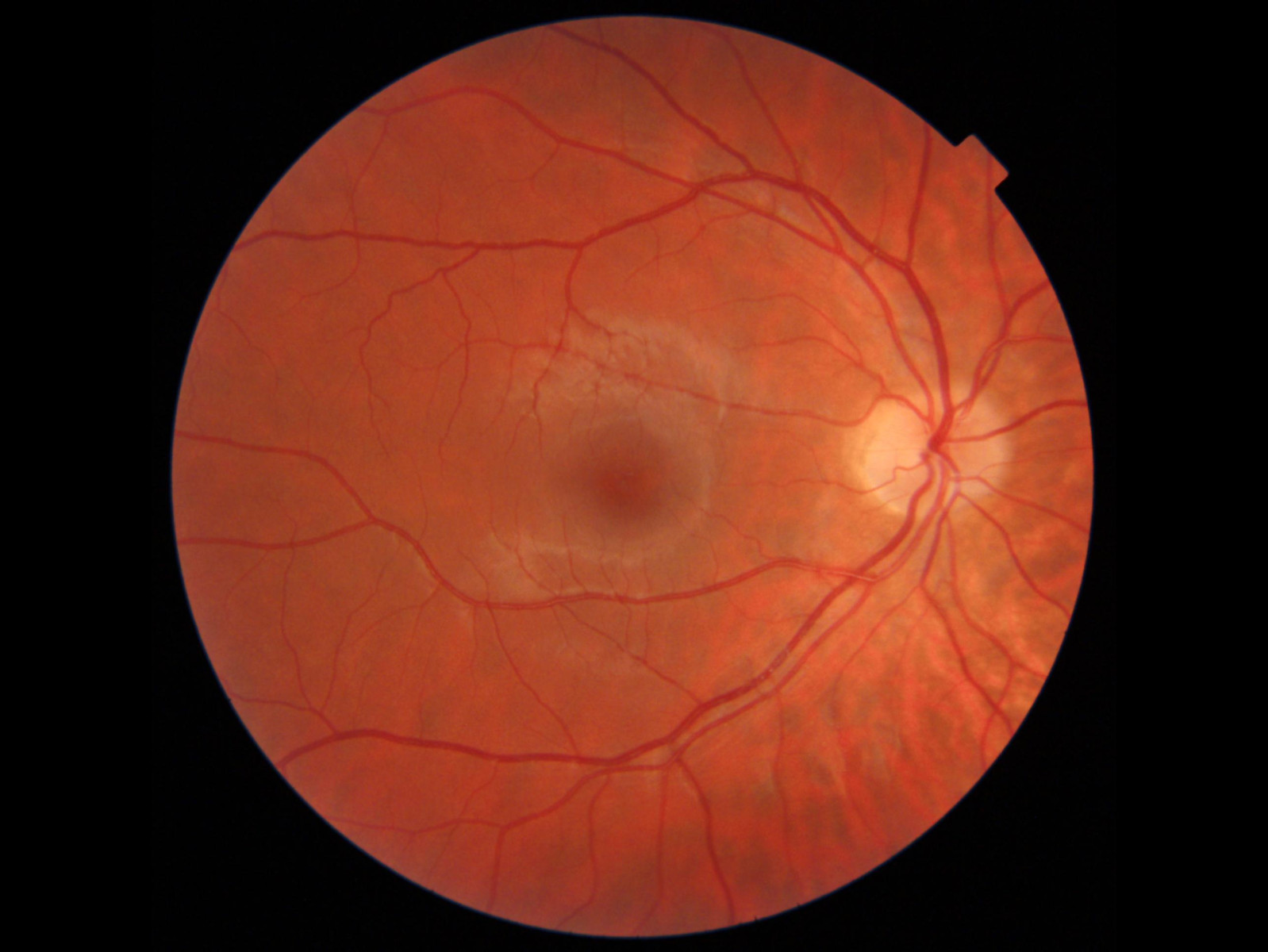
AI may unlock early disease clues hidden in routine eye exams
Advances in artificial intelligence may enable routine eye tests of the future to detect early signs of heart and brain disease long before symptoms appear, a new study led by an interdisciplinary group of scientists based at The University of 野狼社区 has concluded.
Using different types of health data - from body measurements to genetics - the authors have built on evidence that there is a potential future where simple, high street eye scans could be used as a measure of how the rest of the body is functioning.
Using 鈥淯K Biobank鈥� data, a UK volunteer-based study, the researchers developed an AI tool called 鈥淩et-AAE鈥� to explore the links between the eye and disease risk, blood test results, and the appearance and function of different organs, across over 68,000 people.
The study showed that the associations between the eye and body are incredibly broad, identifying that the appearance of the eye is linked to risk of heart failure, high blood pressure, heart attack, Parkinsons disease, dementia and more.
Two types of scan were used in the study - 3D scans of the inner lining of the eye called 鈥渙ptical coherence tomography鈥� (OCT), and simple photographs of the back of the eye called 鈥渃olour fundus photographs鈥�.
Both scan types are widely available at optometrists across the UK, with several million scans already captured every year by high street providers 鈥� making them a highly accessible health marker.
The team showed the two scan types might reveal complementary signals about our future health, with OCT more strongly linked to neurological traits and CFP having broader associations with cardiovascular traits.
Further analysis showed that the eye contains several signals that are captured by AI systems and reveal information about health 鈥� including the appearance of blood vessels and the nerves which connect the eye to the brain.
Some of the patterns the system picked up were caused by cataracts or natural differences in eye colour, showing that researchers might need to account for age and ethnicity when analysing the images.
Our findings show that the eye can reveal a remarkably broad picture of whole鈥慴ody health, offering a way to identify those at risk of heart and brain disease before they occur
One of the key contributions of the study is the work around the biological pathways that might link the eye to disease in the brain, blood vessels and heart.
Genetic analyses showed that eye features are linked to genes involved in neurodegenerative disease pathways, including those related to Parkinson鈥檚 disease, dementia, and broader neurodegeneration.
Physiological analyses linked eye features to blood pressure, blood vessel stiffness, and the function of the heart.
鈥楻adiomic analyses鈥� - which turn medical images into measurable data - showed associations between eye features and the size of the brain, as well as tiny changes in the brain鈥檚 tissue structure detected using MRI scans.
By studying the tiny molecules in the blood, the researchers also found several connections between features in the eye and fat鈥憆elated molecules in the body, which may link the eye to general health.
Lead author Medical Research Council Clinical Research Training Fellow, is an eye doctor and researcher at the University of 野狼社区 and 野狼社区 Royal Eye Hospital, part of 野狼社区 University NHS Foundation Trust.
He said: 鈥淥ur findings show that the eye can reveal a remarkably broad picture of whole鈥慴ody health, offering a way to identify those at risk of heart and brain disease before they occur.
鈥淥ur study advances the use of deep鈥憀earning鈥慸erived eye traits in large鈥憇cale biomedical research.鈥�
Dr , Wellcome Clinician Scientist, Senior Lecturer and Honorary Consultant, from The University of 野狼社区, who oversaw this interdisciplinary work alongside FREng, also from the University, said: 鈥淲hile more work is needed before these tests could arrive on the high street - we hope and believe that routine eye tests will one day be used as part of health screening for disease prevention.鈥�
Professor Frangi is also a RAEng Chair and Digital Infrastructure Programme Co-Lead at the National Institute for Health and Care Research (NIHR) 野狼社区 Biomedical Research Centre鈥�.
He said: 鈥淯sing scans available on every high street, an eye test may become much more than a way to check your glasses prescription.鈥�
鈥淭his work shows the interdisciplinary work ongoing in 野狼社区 thanks to generous support by various translational structures, including the NIHR 野狼社区 Biomedical Research Centre, and the BHF 野狼社区 Centre of Research Excellence, among other funders鈥�.
- Multi-omic analysis of deep learning-derived phenotypes links ophthalmic imaging to cardiovascular and neurological traits is published in on Tuesday 16 June at 4pm UK time. DOI
- Funders included: the Medical Research Council; the Wellcome Trust; the British Heart Foundation; the Royal Academy of Engineering; and the National Institute for Health and Care Research (NIHR) 野狼社区 Biomedical Research Centre.